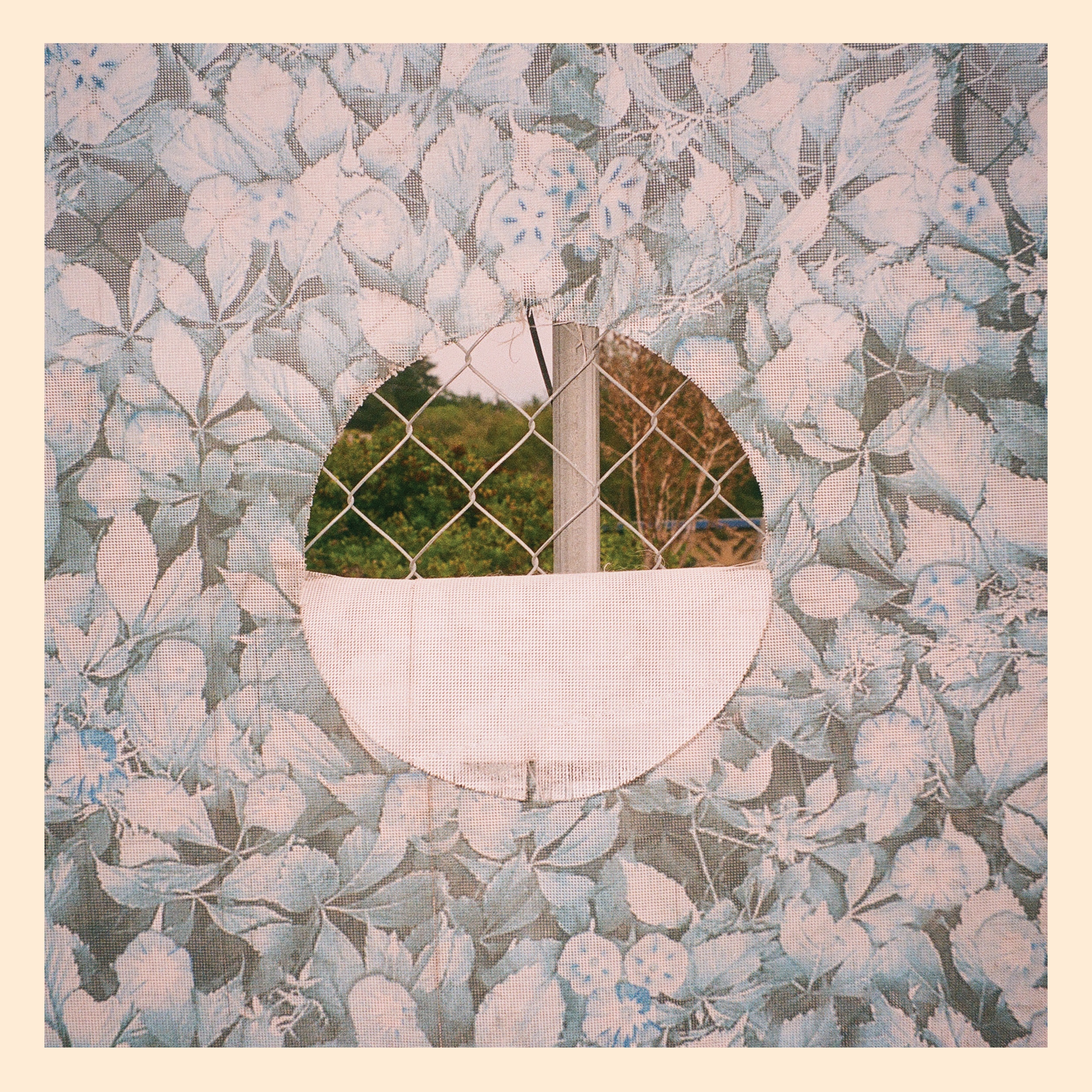
Tracklist
1
It’s Not My Dream
3:36
2
Fragmented Soul
2:50
3
Calcified
3:25
4
I’m a Swimming Pool
2:17
5
I’m a Worm
3:15
6
Black Waterfall
2:55
7
Magic Mirror
3:46
8
Magnum P.I.
2:30
9
Torch Moth Yarn
3:25
10
Driving Around in Arizona
4:28
11
Opening Windows in May
3:52
Physical


About
Over the past two decades, <strong>Stephen Steinbrink</strong> has established himself as one of the most distinctive songwriters on the US West Coast, with a talent for poetic imagery that is rarely matched in its quality. It is therefore somewhat ironic, at first glance, that such a singular artistic voice should be so intensely preoccupied with how elusive the individual self is: its transformations over the course of a life, its shifting, shimmering boundaries, and its cumulative weight across time. Dreams seem to offer access to the self in its purest form, freed from external influence. Yet in dreams, a stable self is even harder to grasp than in waking life, since we can just as easily become childhood versions of ourselves as we can become an entirely different person altogether. In A Split Mirror grapples with the dream of living as an artist today, at a time when the conditions that might sustain a private artistic life are being steadily eroded by the relentless flood of content. Dreams are thus the perfect point of departure for exploring the contradictory nature of the self across Steinbrink's tenth album, In A Split Mirror.<br><br><em>In A Split Mirror</em> was created largely in solitude, during reclaimed hours at the Headlands Center for the Arts, the renowned artist residency programme situated on a decommissioned military base that Steinbrink co-directs. In a 120-year-old gymnasium with twenty-foot ceilings and views of the Pacific Ocean, Steinbrink allowed the dimension of the space to shape the album's sense of time and proportion as he wrote and recorded over two years.<br><br>Musically, the album marks a deliberate departure from the raw approach of Utopia Teased and Disappearing Coin toward a new spaciousness, with arrangements that feel minimal, clear, and open. Steinbrink's vocal fluidity and careful arrangements shift between intensity and softness, crackling and humming with emotion and composure, amplifying and deepening the uncanny images and sensations his writing describes. Although the album features contributions from longtime collaborators — pianist Andrew Dorsett (LAKE), saxophonist and composer Cole Pulice, drummer Chase Kamp (Body Double), and pedal steel player Nick Levine (Jodi, Al Menne) — it remains primarily a Steinbrink work: guitar, drum machine, and surprisingly organic synth textures, produced and mixed in a direct style, lush and multifaceted but not glossily polished. The result is a minimalist movement through genres that has become unmistakably Steinbrinkian.<br><br>Throughout the album, doppelgängers, mirrors, facsimiles, transformed bodies, and unstable memories recur — not as decorative surrealism, but as a symbolic language that comes closer to the truth than a stable narrative would allow. As Steinbrink asks in the opener "It's Not My Dream": "what's a song if I can't sell it?" From this pair — the inward dream and the outward dream — In A Split Mirror traces a path through the kaleidoscope of the self. In the three-part suite "Calcified," a surreal image triggers an existential pull as he wakes from "the dream my father is a boat" and subsequently asks: "Is my true nature going to change?" before everything dissolves into an ethereal drone of Casio, saxophone, and cello. In "I'm a Swimming Pool," as guitars and piano shimmer and flow in intricate cascades, Steinbrink illuminates the dissolution of the self that total immersion in a world can bring about: the taste of chlorine gives way to a merging with the pool, the mind turns "alkaline," the self "ripples." In the recursively psychedelic "I'm a Worm," the "I" shifts from the pool to the apple; the narrator occupies both sides of the paradox of part and whole, first singing: "if the world is an apple, I guess that I am the core," then revising it to: "if the world is an apple, I guess that I am a worm."<br><br>The album's central point of refraction is, fittingly, "Magic Mirror," where Steinbrink addresses the most difficult aspect of the self most directly: its unavoidable tendency toward change. One's own past identity meets one as a doppelgänger when, similar yet no longer identical, "an image melts into a scene / of a person in two thousand three / who looks suspiciously like me." Once one's own memory takes on the uncanny quality of a dream — distorting, but no less true — Steinbrink finds himself compelled to ask: "have I always been two human beings?" Memory as distorting mirage comes to the fore in the near-slowcore "Driving Around in Arizona," which shows Steinbrink in a more sociological mode — used sparingly, but among his most striking. He returns to the arid exurbia of his youth, describing with precision how the "subtle violence" of the built landscape produces a kind of spiritual deformation, and how it has led "so many good people to isolate themselves from community; to isolate themselves from the face of love." He links emotional geography to psychic economy, revealing how memory simultaneously shapes and conceals the self — particularly when one returns to the places and faces that first formed one's identity: "pulling the thread on your history / you find someone you could never be." Images can, like energy, "transform but never dissolve." A kind of resolution is found in the airy closing track "Opening Windows in May," where the self finally orients itself within a concrete present, sketching a holistic picture of being a part of this world, anchored in time through the rhythms and rituals of the seasons.<br><br>In A Split Mirror suggests that identity may be least true when it appears most coherent, and Steinbrink finds far greater value in what emerges when it is broken, misremembered, or dissolved into its surroundings. Rather than resolving these fractures, the album dwells within them, attentive to the strange continuities that survive the transformations of a life. The beauty of his work lies in its fidelity to instability: what is most fragile and mutable in a person is also what remains most alive.<br><br><em><strong>Sedimentary Archive</strong>, the new imprint of Berlin-based label Mansions and Millions, launches with Stephen Steinbrink's In A Split Mirror as its first release. Mansions and Millions was shaped by Berlin's underground left-field pop scene, and its catalogue has grown out of a very particular social and artistic environment of friendships and collaborations. Sedimentary Archive extends that sensibility into a broader frame, making space for idiosyncratic pop music that emerges beyond that immediate geographical context.</em>